Technical Demands of Large-Scale, Mixed-Use Space
Commercial assets present a different set of technical problems than residential or hospitality work, mostly driven by scale. Office lobbies and floor plates often run under fluorescent or LED panel lighting mixed with daylight from curtain wall glass, producing green or blue color casts that need correction either through gelled flash fill or careful white balance work in post. Industrial and flex buildings bring their own lighting challenge: warehouse space is frequently lit by high bay fixtures spaced far apart, creating pools of light and dark that a single ambient exposure cannot handle, so we use multiple flash points or long-exposure light painting to render the full volume of the space evenly.
Ceiling height itself is a selling point in industrial and flex product, and it has to be shot to read accurately. A 32-foot clear height warehouse needs a lens and camera position that shows the vertical volume honestly, since an incorrect wide-angle distortion can either exaggerate or flatten the perceived height, both of which undercut the broker's pitch to a prospective tenant evaluating racking configurations.
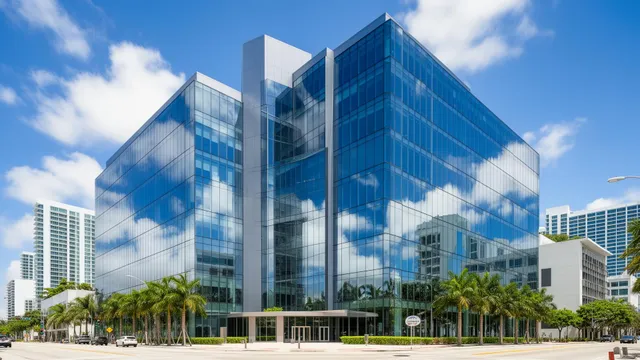
Office and retail leasing photography also deals constantly with glass: curtain wall exteriors, interior glass partition walls common in modern office build-outs, and storefront glass in ground-floor retail components of mixed-use buildings. Reflection control through camera positioning and polarizing filters is standard practice, and exterior building shots are planned around sun position so the glass facade shows depth and the sky beyond rather than a flat mirror of the parking lot.
Access, Tenants and Operational Constraints
Commercial properties are rarely vacant, which shapes every shoot around existing tenants. Occupied office floors require coordinating with property management and sometimes individual tenants to shoot common areas, amenity floors, or available suites without disrupting a workday, which often pushes interior work to early morning, evening, or weekend windows. Industrial and flex properties with active tenants need coordination around loading dock activity and forklift traffic, both for safety and to avoid capturing a competitor's branded trucks or product in frame.
Multi-tenant retail components of mixed-use projects follow the same access logic as standalone shopping centers, with common area shots scheduled during operating hours and individual vacant suites shot separately when available for showing. Any identifiable tenant employee, customer, or vehicle with visible signage typically needs to be excluded from frame or covered by a release, particularly for assets marketed through an offering memorandum where the ownership group wants a neutral, sale-ready presentation rather than any single tenant's branding dominating the images.
Scheduling Around Weather, Season and Availability
South Florida's rainy season from roughly June through October affects commercial exterior and aerial drone work directly, since afternoon storms limit safe flight windows and flat, even light is actually preferable for site plan and roof condition photography over harsh midday sun. Winter's dry season and clearer skies make it the preferred window for aerial site overviews used in offering memorandums, where a clean, well-lit birds-eye shot of the parcel, parking field, and surrounding submarket context carries real weight with an investment committee reviewing the deal remotely.
Availability of vacant suites for interior photography can also be seasonal in a practical sense, tied to tenant move-out and build-out timelines rather than weather, so scheduling on many commercial assignments is coordinated directly with the listing broker around whichever unit is between tenants at the time.
Deliverables for CoStar, Crexi, LoopNet and Offering Memorandums
Commercial real estate marketing runs through a specific set of platforms, and deliverables are built for each. CoStar and LoopNet listings require a defined set of exterior, interior, and site photos along with accurate specifications, and stronger photography measurably improves how a listing performs in search and inquiry volume on those platforms. Crexi listings for both leasing and investment sales lean heavily on a complete image set plus aerial drone footage and, increasingly, short video overviews embedded directly in the listing page.
Investment sales assignments require a higher production tier: photography and drone footage built specifically for the offering memorandum and the investor deck, including aerial overview shots that establish the site within its submarket, twilight exteriors for a stronger cover image, and interior shots of any anchor tenant space or amenity area that supports the underwriting narrative. We also produce matterport-style 3D tours and drone video for broker opinion of value packages and for virtual property tours used in early-stage investor outreach before an in-person site visit is scheduled.
Who the Deliverables Serve
Leasing brokers use the photography and video to drive inquiry volume on CoStar, Crexi, and LoopNet listings and to support tour packages sent to prospective tenants before a physical site visit. Investment sales brokers and asset managers use the higher-tier deliverables inside offering memorandums and investor decks, where image quality directly affects how seriously an out-of-market investment committee engages with a deal in early review. Property managers use updated exterior and common area imagery for ownership reporting and for the property's own marketing collateral, and regional marketing directors at larger ownership groups use consistent photography across a portfolio to standardize how every asset is presented to the capital markets regardless of which broker or market is running point on a given deal.